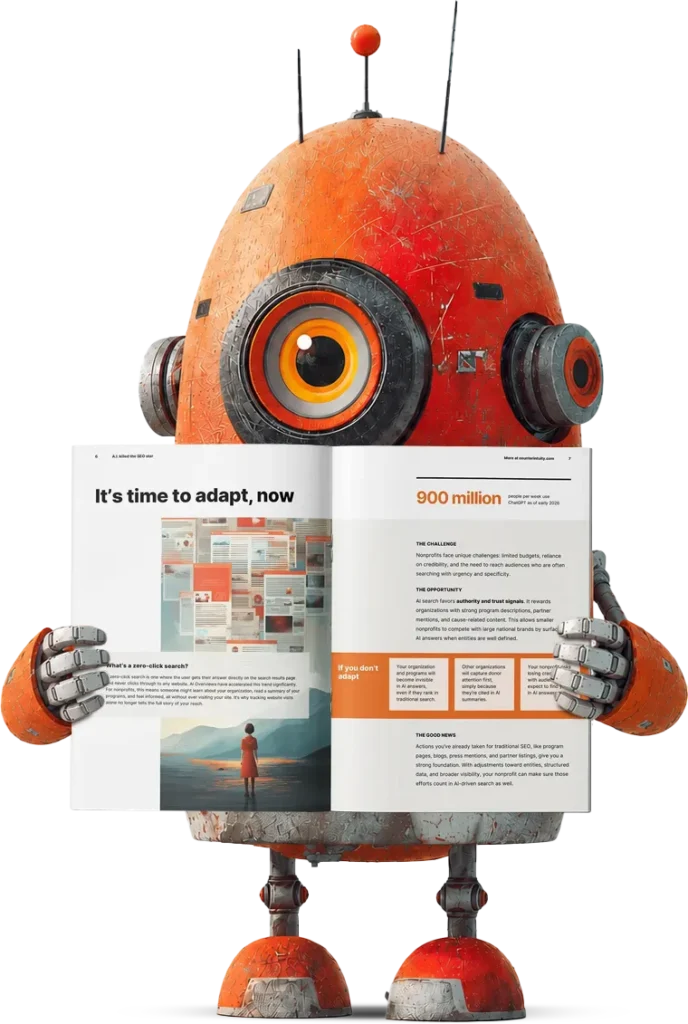
Preparing for 2026 is about anticipating social, economic, technological, and policy shifts — and positioning your nonprofit for sustainability and growth. Here are 9 things you should do now to make the most of 2026.
1. Embrace AI and automation thoughtfully
AI is transforming how nonprofits operate — from donor communications to program delivery.
Action steps:
- Put your people first in line on tasks best assigned to people (like donor relations and customer service and wellness) — then leave as much as possible of everything else to AI.
- Examples: Evaluate how AI can enhance your mission (e.g., chatbots, predictive analytics, grant writing tools).
- Check out this curated list of AI tools. https://aitoolsdirectory.com/
2. Reassess your strategic plan
The world is changing fast — climate, economy, policy, and demographics.
Action steps:
- Conduct a scenario planning session for 2026 — either by end of year or even in January/February.
- Identify key risks (e.g., funding volatility, regulation changes).
- Identify key opportunities (new funding, partnerships, programs, and people)
- Refresh mission, vision, and goals with foresight. Own the change.
3. Strengthen fundraising resilience
Donor behavior is shifting. Trust, transparency, and impact reporting are more important than ever.
Action steps:
- Diversify revenue streams (earned income, recurring giving, planned gifts).
- Invest in digital fundraising tools.
- Build stronger donor retention programs.
- Communicate. Solidify your message and get it out there.
4. Invest in cybersecurity and data infrastructure
Nonprofits are increasingly targeted by cyberattacks. Sad to say, we’re called upon more and more to help nonprofits offset this.
Action steps:
- Conduct a cybersecurity audit.
- Train staff in cyber hygiene.
- Upgrade systems to ensure secure donor and beneficiary data management.
- Make sure your website and plug-ins are up-to-date; old sites are prone to misadventure.
- Seriously. Do all this.
5. Develop a future-ready workforce
Your people are your programs. If they’re committed to your mission, do what you can to help them succeed and to recognize that their work habits have changed.
Action steps:
- Assess skills gaps in your team. Offer training and upskilling pathways.
- Develop in-house or outsourced backups: people who can jump in when needed.
- Build flexible, inclusive work policies. The ol’ onsite Monday-Friday 9-5 is dead — almost nobody wants it.
6. Tell stronger stories, including with numbers
Funders and partners are demanding stronger evidence of impact. People give to nonprofits for two reasons: belief in the mission, and belief that the nonprofit can achieve that mission.
Action steps:
- Revamp your impact measurement frameworks.
- Use data visualization tools for reporting. People see more quickly than they read.
- Train your team in storytelling built around impact.
7. Strengthen collaborations and partnerships
Networks matter more than ever for scale and sustainability. In a time of challenging economics, partnership can take you far.
Action steps:
- Map your ecosystem — who’s aligned with your mission?
- Form strategic alliances with government, business, or peer orgs.
- Share resources and data for collective impact.
9. Prepare for disruption
Dramatic unpredictable change will continue to shape the operating environment.
Action steps:
- Develop contingency plans for service continuity during disruptions.
- Develop contingency plans for funding downturns:
- What would you do if your revenue shrank 10%? 25%? 50%? What if your funding arrived months late? (We’re hearing more of this.)
- Develop plans as well for funding upturns: How would you make best use of unexpected donations, grants, and bequests?
- Assess environmental impact and adopt sustainability practices.
A bonus:
10. Build a culture of innovation
Nonprofits that experiment, learn, and adapt will thrive in uncertainty. Remember: Great change also brings opportunity.
Action steps:
- Allocate budget for pilot projects or R&D. Even just $20 dedicated to a kaffee klatsch can inspire revolutionary thinking.
- Create safe spaces for staff to pitch and test new ideas.
- Celebrate failures that lead to learning.
- Do whatever you can to encourage ideas and looking ahead. Because there’s always a future. Help create the one you want.
Feeling anxious or excited about 2026? Let us know. We’d love to hear your plans.