
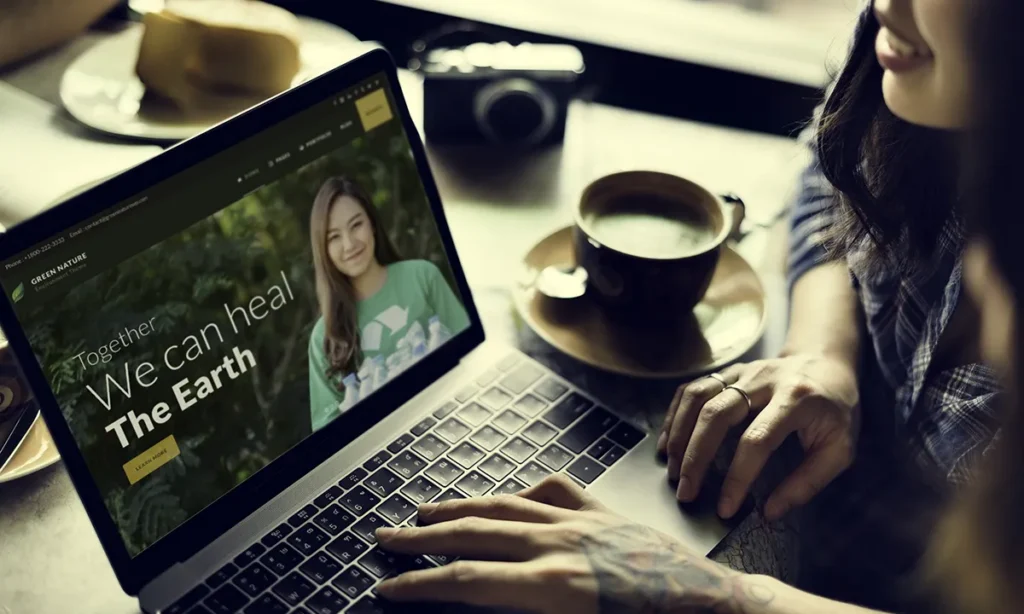
Nonprofit website best practices have changed more in the past two years than in the previous five. Donor expectations are higher, search algorithms are smarter, and the gap between organizations with effective digital presences and those running on outdated sites is widening fast. If your nonprofit’s website hasn’t had a meaningful update since 2023 or earlier, 2026 is the year that starts to cost you.
The good news is that most of what needs to change isn’t about budget. It’s about priorities.
This guide breaks down what’s actually shifting in nonprofit website design, what’s become non-negotiable, and where to focus your energy to convert more visitors into donors, volunteers, and long-term supporters.
What you’ll learn in this post
- Why plain language outperforms mission-speak with donors
- How visual storytelling and short-form video are reshaping nonprofit web design
- What Google’s Core Web Vitals mean for your search visibility
- How to reduce friction in your donation flow and recover lost gifts
- What it looks like to build a website that deepens community rather than just broadcasting information
Clear messaging: why plain language wins with donors
One of the most significant shifts in nonprofit web writing now is the move away from jargonistic “mission-speak.” Phrases like “leveraging synergies” or “empowering communities through holistic frameworks” just don’t land with donors. In fact, they slide right off. Clear, direct language that explains who you help and why it matters consistently outperforms old sector vocabulary.
Visual storytelling for nonprofits in 2026
With the rise of AI, audiences are savvier and more suspicious when looking at imagery. Donors want to see authentic and specific pictures, so as a result, most stock photography is on its way out, because it’s easily spotted. Photos of real people in your real community go much further.
Additionally, general design trends in 2026 point to this: warmer palettes, textures, hand-drawn elements, and layouts that feel less corporate and more like they were made by people who care. This aesthetics shift helps your audience trust you and identify with your organization.
Alongside this, short-form video is now an expectation, not a bonus. A 60-second clip of a program in action or a beneficiary speaking directly to the camera converts in a way that still photographs simply can’t match.
Website speed, mobile design, and accessibility for nonprofits
These three have been important for years, but in 2026, they’re absolute necessities.
More than half your web traffic may be arriving via mobile, and if your site doesn’t load quickly and display cleanly on a phone, you’re losing people before they’ve read a single word.
Google’s Core Web Vitals (metrics that measure load speed, visual stability, and interactivity) directly affect your search ranking. So, a slow site makes you invisible.
Accessibility remains an urgent legal and ethical priority. Ensuring your site works for people with visual, motor, or cognitive impairments isn’t complicated, and it’s the right thing to do. You need good color contrast, logical page structure, alternative text on images, and keyboard navigability, but these elements do require deliberate attention.
In addition to having proper content, structure and styling, we strongly recommend adding a tool called accessiBe for the clients whose sites we manage.
How to optimize your nonprofit donation page
Here’s where the most money is left on the table. Donation forms with too many fields or unclear steps and messaging cause drop-off at the exact moment someone has decided to give.
The benchmark this year is a form that can be completed in under two minutes, on a phone, without confusion.
What this means in practice is fewer fields, specific suggested amounts with context (e.g., “$25 provides meals for a family for a week”), and a thank-you experience that feels personal rather than transactional.
If you haven’t tested your website donation flow recently with fresh eyes from start to finish, do it this week. On a phone. You might find friction you never knew was there.
Building a nonprofit website that grows your community
If you want to think future-forward, your website can’t just be a publishing platform; it needs to be a community hub. Volunteer portals, members-only resources, event feeds, and interactive impact dashboards can turn one-time visitors into long-term supporters. This can sound overwhelming, but you don’t need to build this all at once. Instead, start with a plan for how your website can deepen relationships rather than just broadcast information.
It’s worth remembering that there’s no such thing as a “set it and forget it” web strategy.
Analytics tools are more accessible than ever, and you’ll get more out of your website by treating it like a living thing. Test headlines, watch where people drop off, update your content seasonally, and make small improvements consistently rather than waiting for a full redesign every few years.
Not sure where your website stands?
Let’s have a conversation and take a look.
Frequently asked questions
How often should a nonprofit update its website?
Plan for small updates continuously and a more thorough review at least once a year. Seasonal content, program changes, and staff transitions should be reflected on your site as they happen. For structural or design updates, an annual audit helps you catch things like outdated messaging, slow load times, broken links, and donation flow friction before they start costing you visitors and gifts.
What makes a good nonprofit donation page?
The best nonprofit donation pages are fast, mobile-friendly, and free of unnecessary friction. That means short forms, suggested giving amounts with specific context (like what each amount provides), and a confirmation experience that feels personal rather than automated. If a first-time donor can complete the process in under two minutes on a phone without confusion, you’re in good shape.
Does website accessibility affect nonprofit SEO?
Yes, in several direct ways. Search engines favor sites with clean semantic structure, descriptive image alt text, and logical page hierarchy, all of which are also core accessibility requirements. Beyond SEO, accessibility ensures you’re not turning away donors, volunteers, or beneficiaries who rely on assistive technology.
What is Google Core Web Vitals and why does it matter for nonprofits?
Core Web Vitals are a set of metrics Google uses to measure real-world user experience on your site, specifically load speed, visual stability, and how quickly your pages respond to interaction. Google uses these scores as a ranking factor, which means a slow or unstable site can suppress your visibility in search results regardless of how good your content is. For nonprofits competing for attention without large ad budgets, organic search ranking matters, and Core Web Vitals are a direct lever.
How much does it cost to redesign a nonprofit website?
It depends significantly on the size and complexity of your site, your existing platform, and what needs to change. That said, the more useful question is what an underperforming website is already costing you in lost donations, volunteer signups, and grant credibility. A focused redesign with the right priorities can deliver meaningful returns quickly. If you’re not sure where your site stands, a conversation and a quick audit are good places to start.